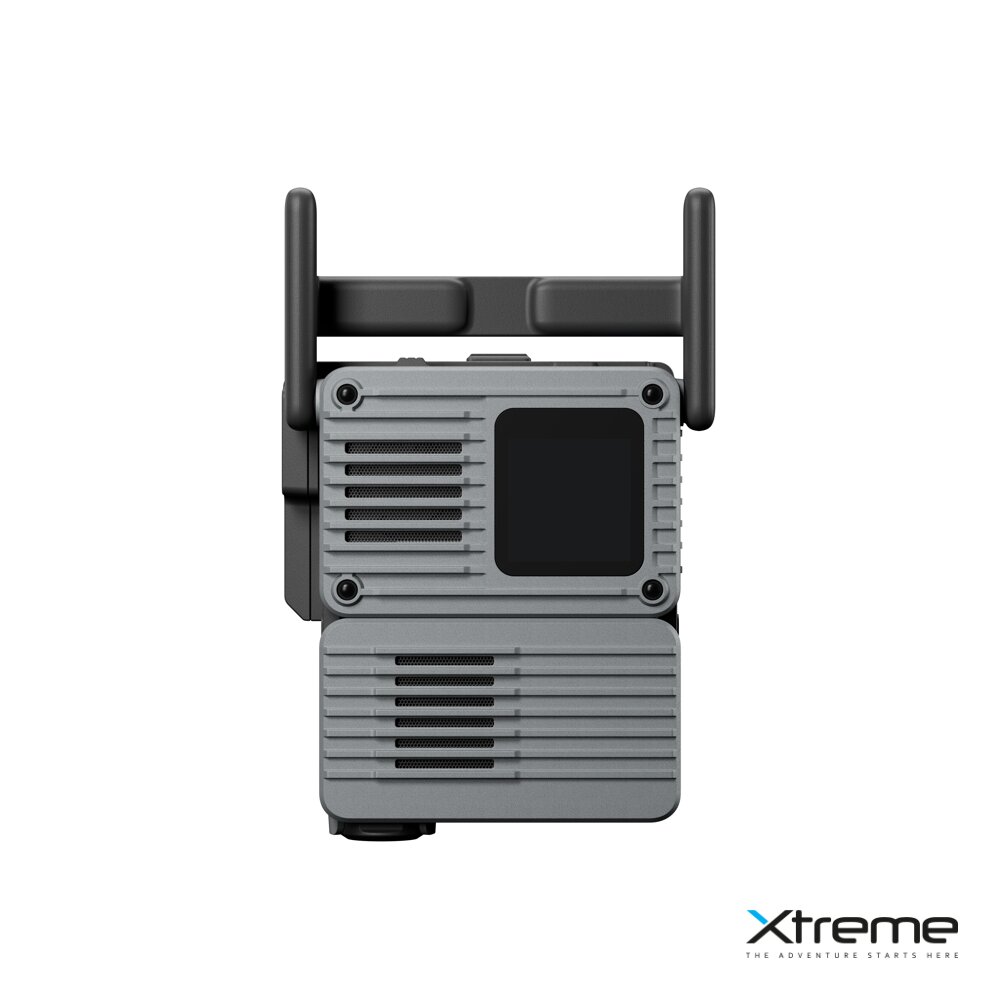
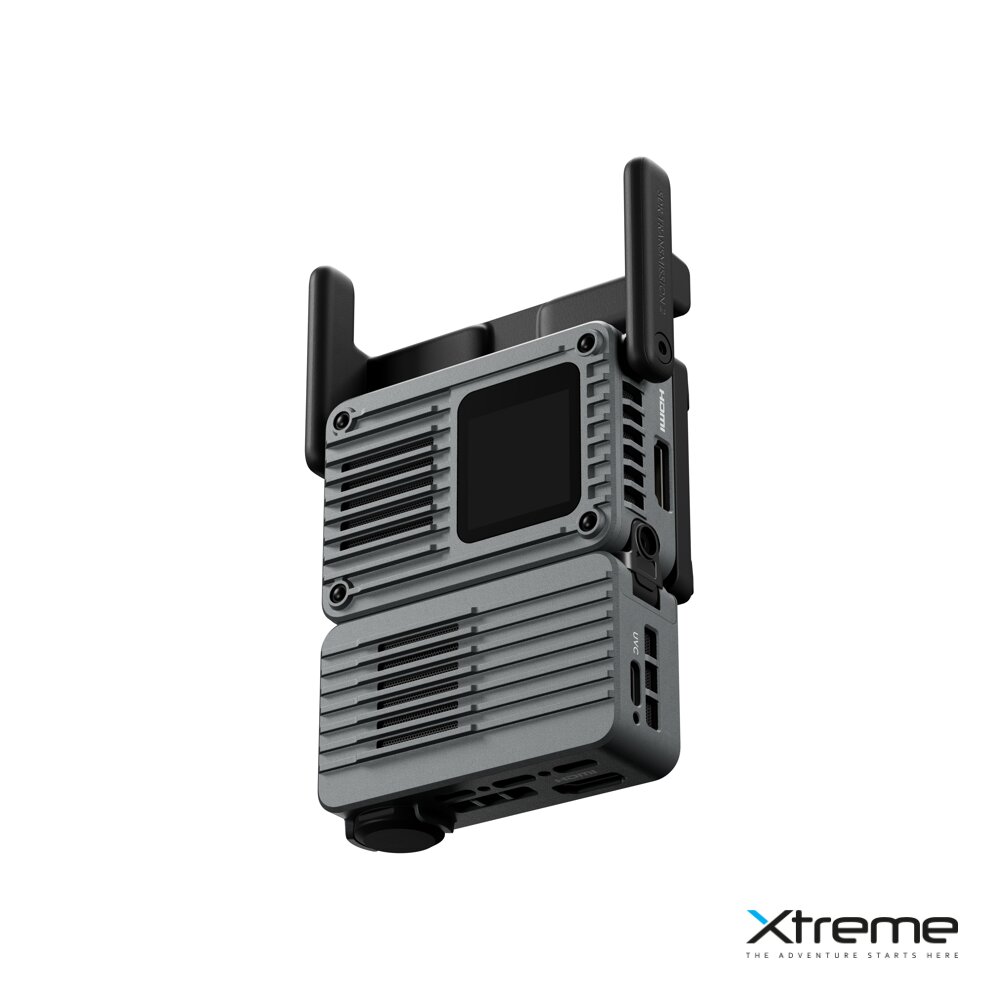
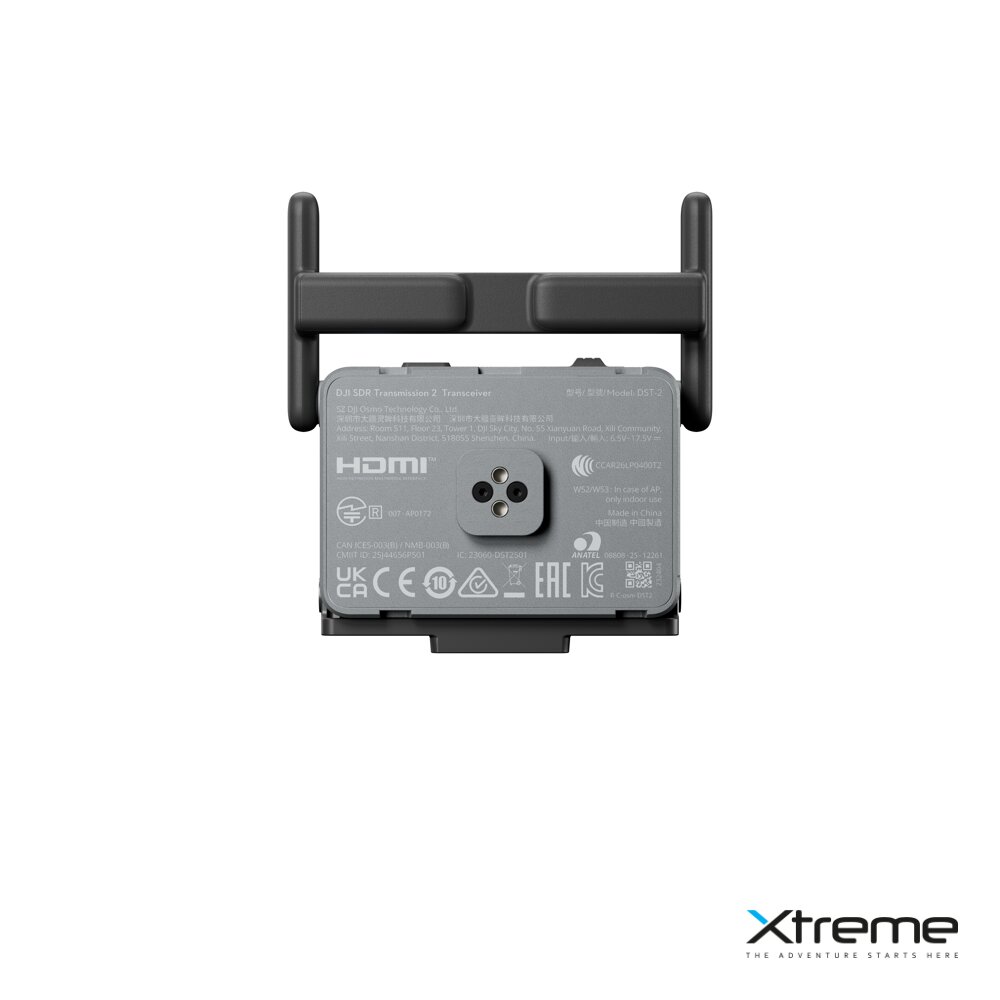
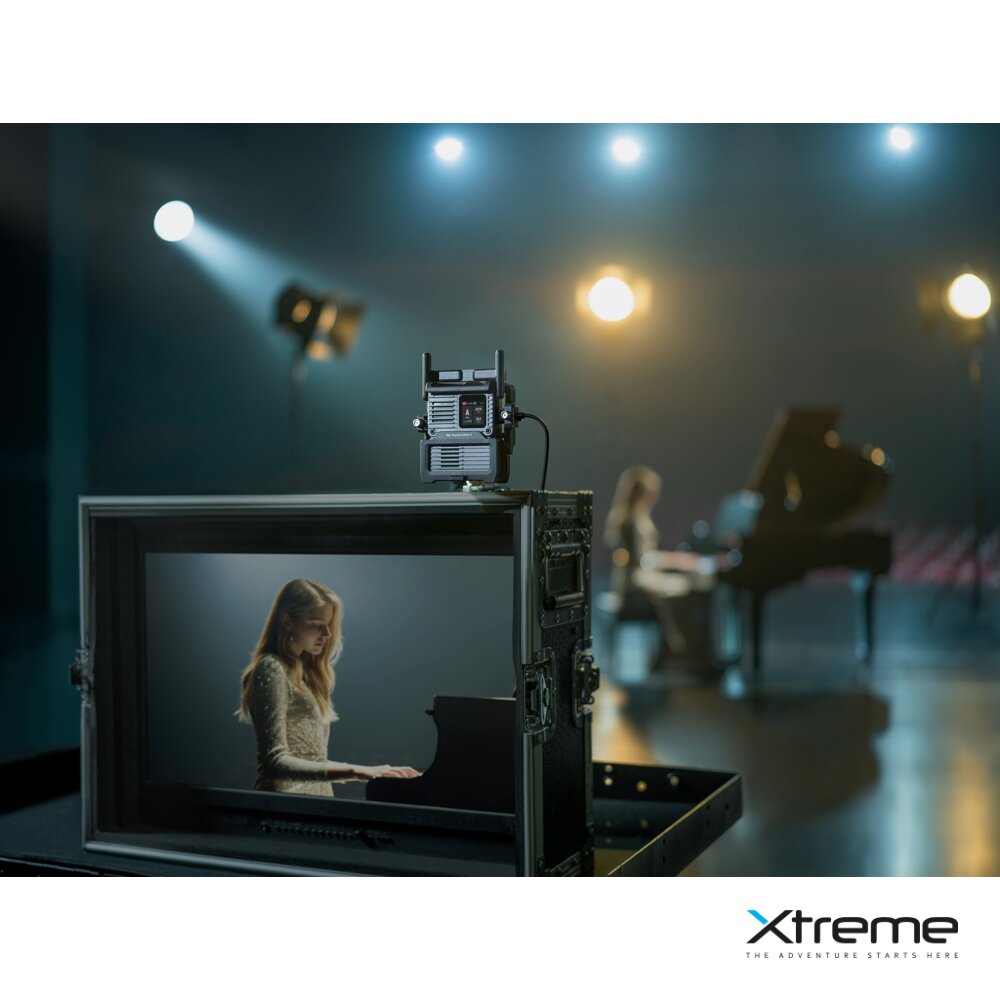
DJI SDR Transmission 2 is a wireless multi-group transmitter/receiver unit designed for demanding professional filming. The product follows on from the previous DJI SDR Transmission model, while bringing several technological improvements. It is a device that takes SDR (Software Defined Radio) technology a step further - offering higher immunity to interference, better image quality and greater transmission range. Thanks to this, it can maintain a high data rate with low latency even on a crowded film set, which is crucial for smooth collaboration of the entire crew.
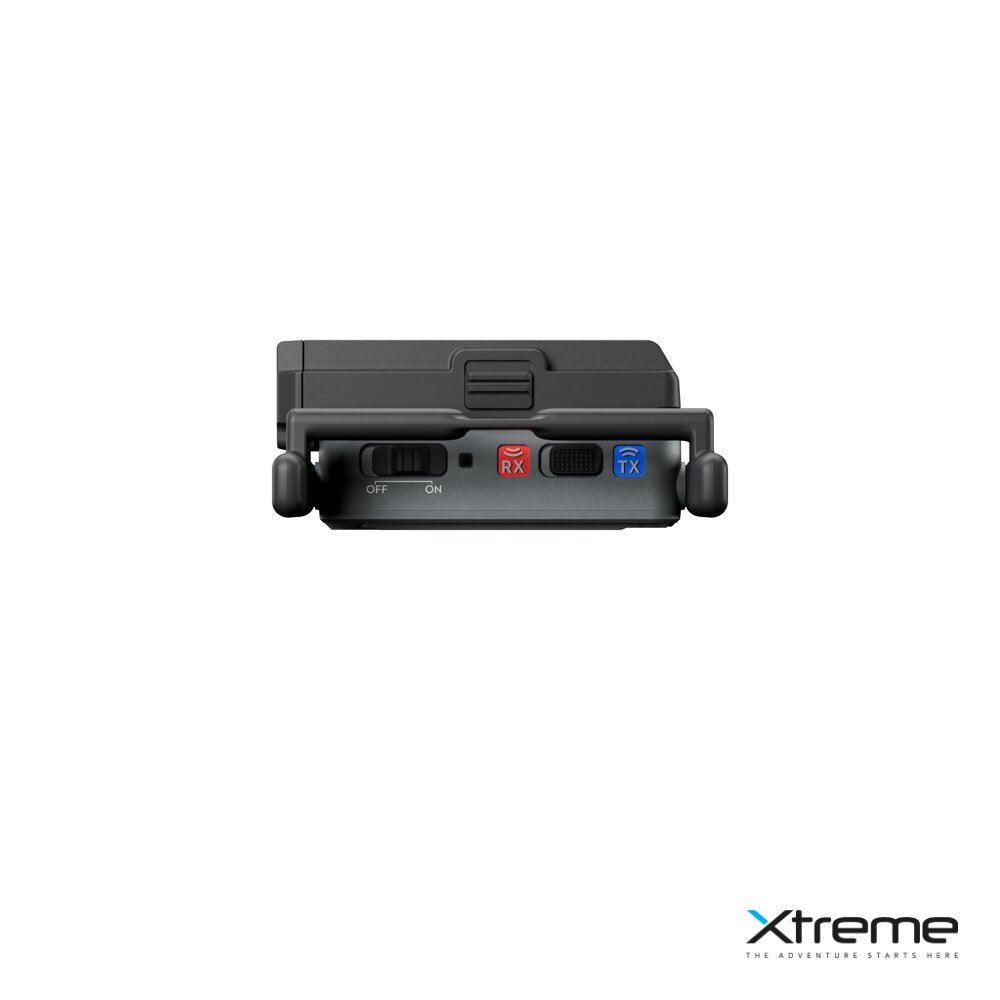
One of the key features of the DJI SDR Transmission 2 is its switchable transmitter/receiver (TX/RX) design. This means that the same unit can function as either a transmitter or a receiver as needed, providing significant flexibility in production setups. The device is also fully compatible with the DJI Ronin line of gimbals, making it easy to integrate into the existing DJI ecosystem and be used with gimbals as well as professional camera equipment.
The result is a compact and lightweight device that, despite its small size, offers professional performance comparable to larger and heavier wireless image transmission solutions that filmmakers are familiar with from large productions.
DJI SDR Transmission 2 is designed to withstand the harshest conditions on set. Increased immunity to interference means the device can maintain a stable connection even in environments where multiple wireless systems are transmitting at the same time – a common reality on larger productions where camera, audio and communication wireless systems operate side by side. The improved image quality and greater transmission range then ensure that the director, cinematographer and other crew members have reliable, high-quality images, no matter how large or complex the shot.
High bitrates with low latency are crucial for professional filming, as any image lag or quality degradation can make it difficult for the cameraman, focuser, or gimbal operator to work. DJI SDR Transmission 2 is built to maintain this high standard even on a crowded set where the wireless spectrum is being used up by a multitude of other devices.
The combination of a switchable transmitter/receiver design and compatibility with the Ronin series delivers professional performance in a compact and lightweight package – exactly what filmmakers appreciate most when working in the field, for action shots, or for small-scale productions with limited space.

The product features six key features that define it as a modern wireless image transmission solution for professional production:
A single DJI SDR Transmission 2 transmitter can control up to eight receivers, each with a remote control. This means that directors and cameramen can view high-definition footage on their monitors, while operators and focusers can adjust settings and control the camera remotely. This allows multiple crew members to work on both the image and camera control simultaneously, without the need for duplicate equipment or complicated cabling.
DJI SDR Transmission 2 allows up to five transmitters and 40 receivers to operate simultaneously. This feature is designed for large productions where multiple camera crews work simultaneously, each of which requires its own wireless image transmission. Even in such a demanding environment on set, the wireless image from the camera remains stable without losing 4K quality. This allows individual groups of transmitters and receivers to operate side by side without interfering with each other's signals or reducing the quality of the transmitted image.
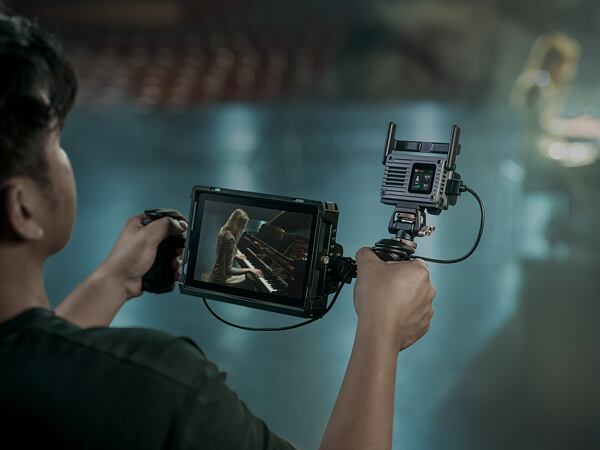
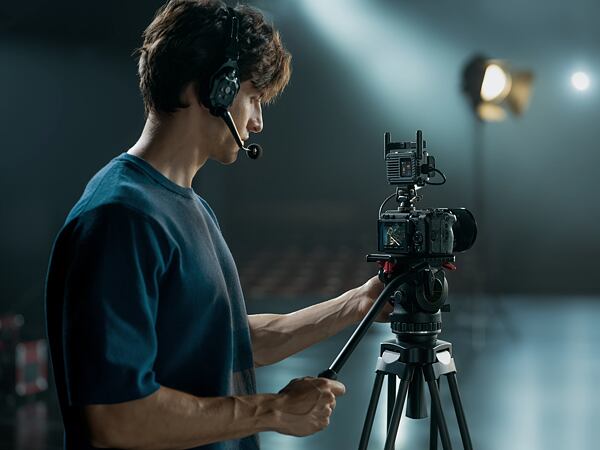
One of the most significant innovations of the DJI SDR Transmission 2 compared to the previous model is the Auto Channel 2.0 function. This technology automatically takes over channel management on stage, so that the operator does not have to worry about it manually. With automatic mode enabled, the transmitter/receiver units recognize each other and intelligently coordinate frequencies to minimize interference with each other.
With more accurate spectrum scanning and conflict detection, each unit can seamlessly switch between frequencies as conditions change on set. This means that even if the surrounding radio environment changes during filming – for example, due to the arrival of additional wireless devices or a change in location – the system can automatically adapt and maintain a stable connection.
This intelligent coordination is especially important in situations where multiple systems are running side by side, which is common in large productions with multiple camera crews. Auto Channel 2.0 thus directly contributes to the reliability described in the previous section on working with multiple groups of transmitters and receivers.
According to the manufacturer's documentation, Auto Channel 2.0 delivers better transmission performance compared to the original DJI SDR Transmission, especially when multiple groups of transmitters and receivers are operating simultaneously. Auto Channel 2.0 is activated when the Channel Mode is set to Automatic.
DJI SDR Transmission 2 transmits DCI 4K video at 60 frames per second, in 10-bit HDR and with H.265 compression, with a data rate of up to 50 Mbps. The result is images with rich detail, smooth color gradations, and clear highlights and shadows, with consistent quality across multiple cameras. This is especially important for professional productions because it allows for consistent image monitoring regardless of how many cameras are connected to the system at the same time.
Please note that DCI 4K/60fps HDR requires connection via HDMI or DP (bottom USB-C port) on the main transmitter/receiver unit. Also, the maximum encoding bit rate of 50Mbps was measured under controlled conditions and actual encoding and transmission bit rate may vary depending on the environment and transmission range.
The DJI SDR Transmission 2 can transmit video up to 4 km away. This feature makes it a suitable solution for a wide variety of shooting situations – from open stadiums to dense mountain forests to demanding shots of moving cars or working with an FPV drone. This ensures that the connection remains reliable where filmmakers need it most, in outdoor and logistically demanding conditions where the camera may be far away from the monitoring station.
The 4 km range was measured in accordance with CE with one transmitter (TX) and one receiver (RX) in a free, unobstructed area without interference, under controlled conditions. Actual range in the field may therefore vary depending on obstacles, interference and other ambient conditions.
Despite the higher image quality, the latency of the DJI SDR Transmission 2 remains as low as 35ms. Low latency is key to ensuring that monitoring and remote commands – such as focusing or gimbal movements – remain responsive, meaning that the response to a command is almost instantaneous. This is especially essential for dynamic shots, where even a small delay can mean a missed moment or inaccurate focus.
Latency does not include camera and display latency. It was measured while recording video in 1080p at 60fps and 4K at 60fps.
DJI SDR Transmission 2 allows you to switch between transmitter and receiver modes on the fly. This means that the ratio of transmitters to receivers does not need to be determined in advance before filming - each unit can adapt to what the current shoot requires. This feature greatly simplifies logistics for productions where needs change throughout the day, for example when an additional receiving point needs to be added or the transmitting side needs to be reinforced.
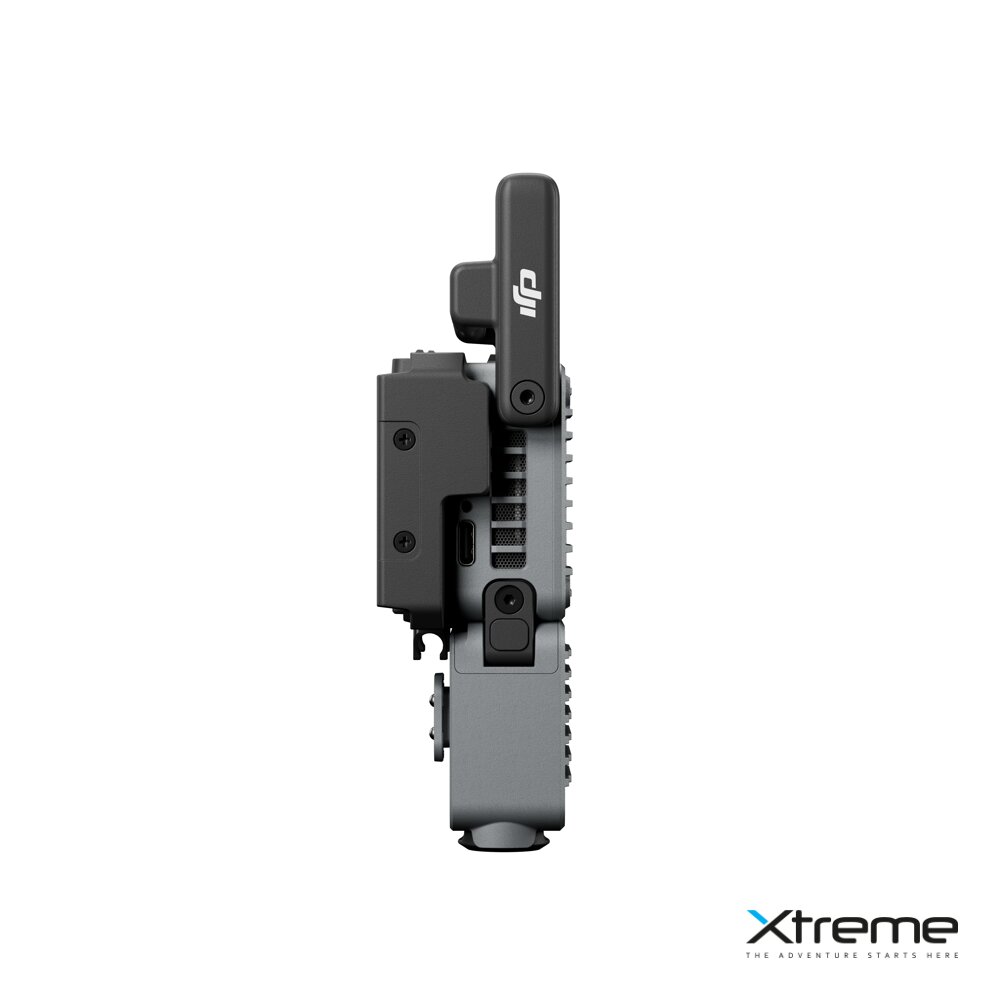
The transmitter/receiver unit itself weighs approximately 136g and offers one HDMI port and two USB-C ports. Its low weight takes the strain off the handheld gimbal, which is important for extended handheld shooting where every gram on the gimbal affects the operator’s comfort. At the same time, its compactness makes it easy to mount on a wide range of camera rigs, from smaller mirrorless cameras to larger cinema cameras.
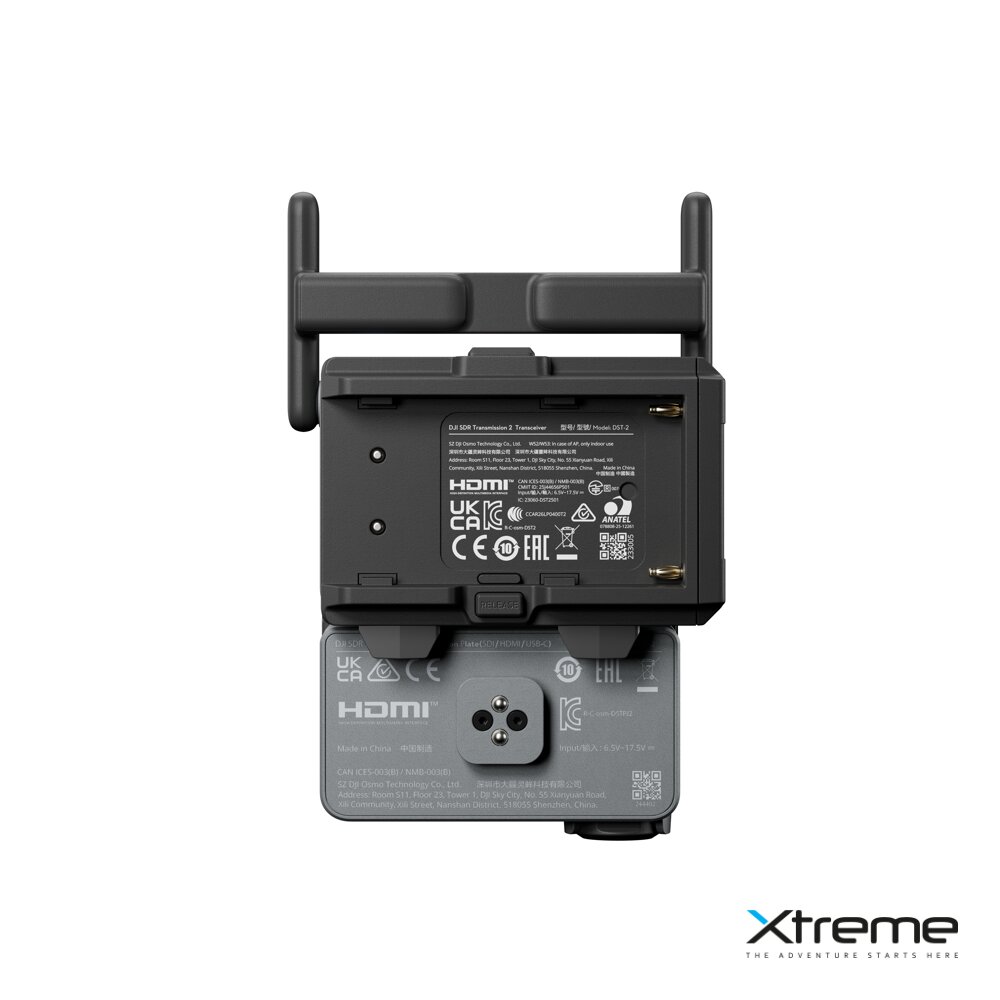
For more demanding applications, an optional expansion board is available that offers one SDI port, one HDMI port, and four USB-C ports. This board also supports metadata transfer via SDI from common cinematographic cameras such as ARRI and RED, which is important for professional workflows where metadata from the camera is used in further stages of post-production. The SDI port is available on this expansion board, which is sold separately and is not included in the basic package.
For mounting on cars and other outdoor rigs, an optional cage is also available, adding rugged protection and a range of mounting points to the unit. This cage securely attaches the unit to a wide range of gimbals and cages, making it ideal for outdoor and action shots where the rig is exposed to shock, vibration and adverse weather conditions. Like the expansion plate, the cage is sold separately.
DJI SDR Transmission 2 integrates seamlessly with DJI RS gimbals. With the DJI Ronin app, a single phone can handle complete monitoring and control – from wirelessly controlling the gimbal to starting and stopping recording. This integration is ideal for smaller, more mobile setups where there is no space or need for more extensive monitoring equipment and where a single operator needs to control multiple functions at once from a single device.
For more demanding professional applications, DJI SDR Transmission 2 also supports DJI Ronin 2 and Master Wheels. Even when working with large cinematographic cameras on demanding rigs or cranes, operators can stay at the monitor and precisely control every movement via the wheels. This capability is crucial for large film productions using heavy camera rigs that require precise and smooth movement control.
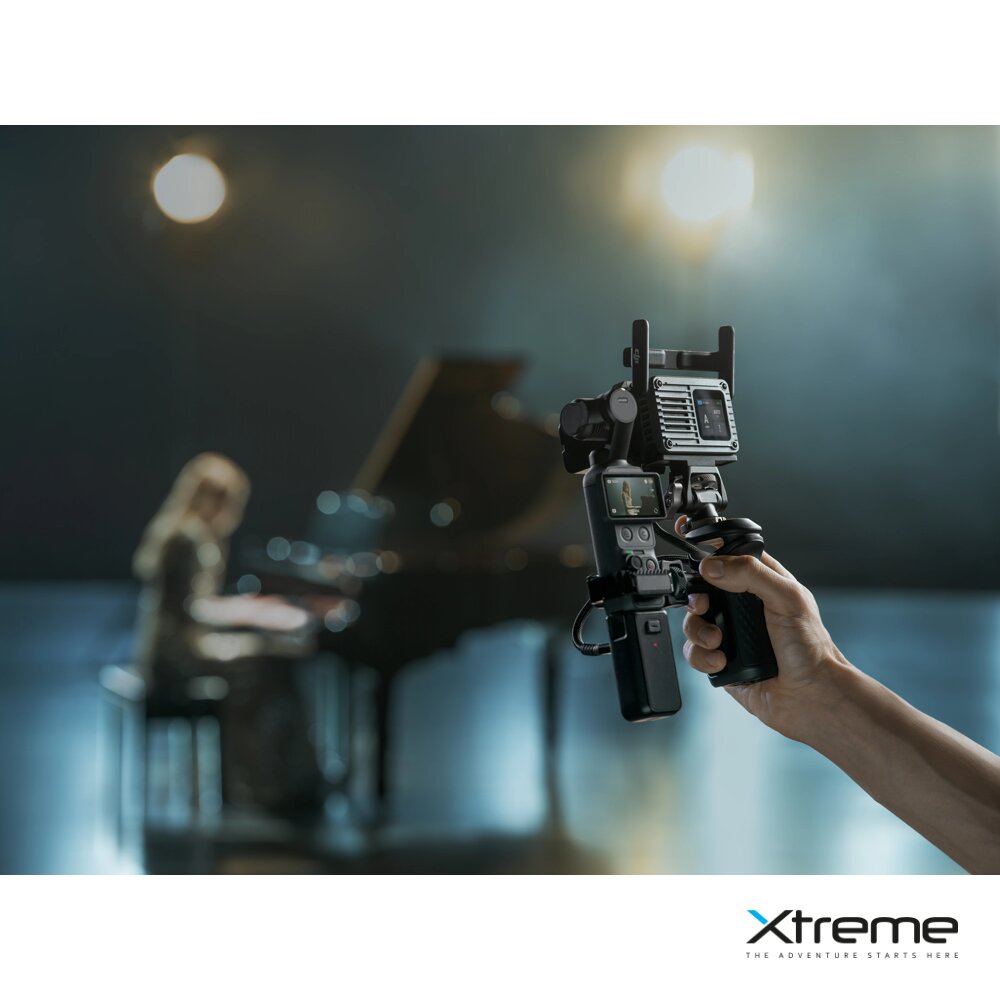
For action shots, reality shows, or hard-to-reach angles, you can connect an Osmo Action or Osmo Pocket camera via USB-C. Specifically, the Osmo Action 6 and Osmo Pocket (Osmo Pocket 4 and later) are supported for both monitoring and powering via USB-C. This option offers an easy way to add remote monitoring footage from views that larger camera rigs can’t cover – such as from small action cameras placed in hard-to-reach locations.
DJI SDR Transmission 2 allows you to switch between images from different cameras directly on the transmitter/receiver unit or in the DJI Ronin app, without having to reboot, scan, or re-pair. This feature saves valuable time on set, where every minute spent on technical setup means lost productive shooting time. Fast switching between cameras is especially useful in multi-angle productions where the operator needs the flexibility to monitor different image sources.
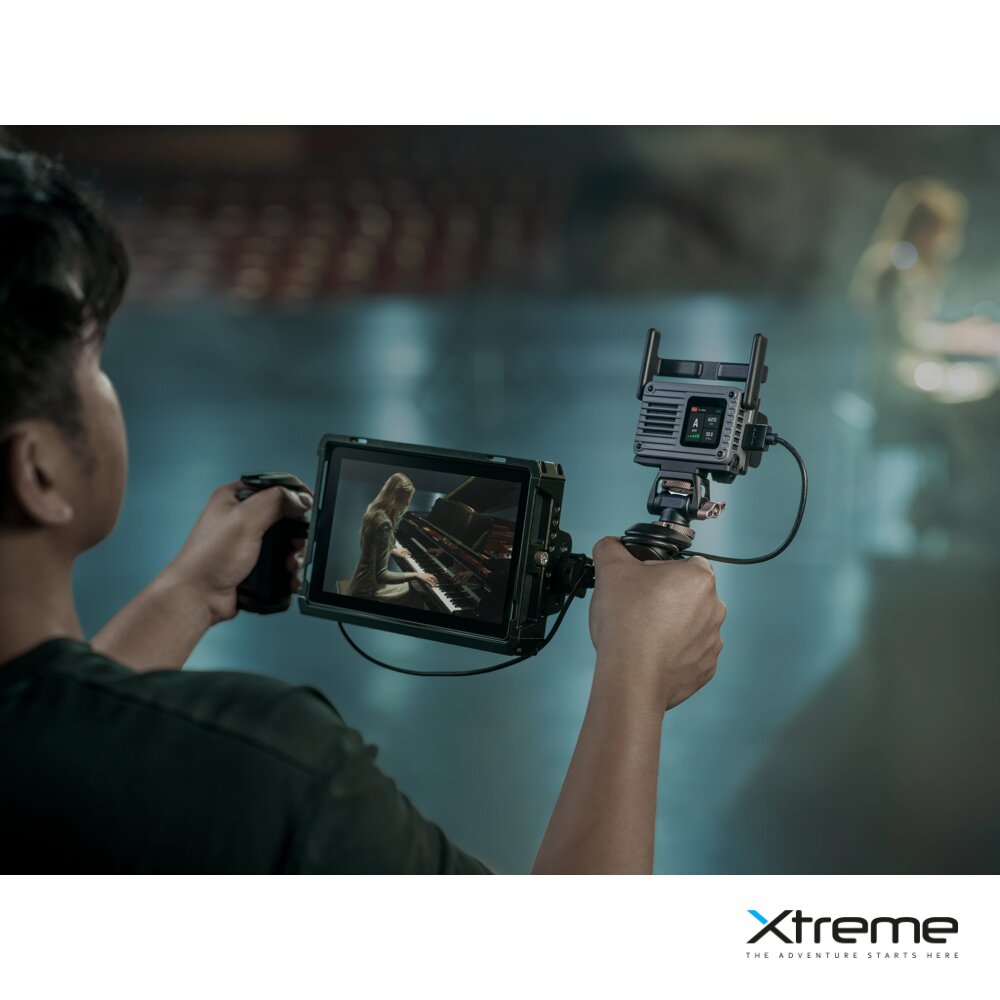
The device delivers ultra-high definition, low-latency images to professional monitors via SDI, HDMI or DP. This allows multiple monitors to share the same clear image at once, a common requirement in productions where, in addition to the cameraman, the director or other crew members are also watching the image on separate monitors.
For on-the-go monitoring, you can connect your phone or tablet directly to the receiver via USB-C and view the footage in the DJI Ronin app. This connection requires a USB-C to USB-C or USB-C to Lightning cable, which is not included. A wired connection keeps the transmission stable and with a high data rate, which is an advantage over wireless alternatives, which can be more prone to dropouts or degradation in signal quality.
The DJI Ronin app supports multiple professional monitoring tools that make it easy to work with exposure and color right on set:
Together, these tools offer more efficient and accurate image monitoring directly during filming, reducing the risk of technical errors that would otherwise be discovered in post-production.
DJI SDR Transmission 2 supports PTP camera control. This allows you to directly view and adjust aperture, shutter speed, and ISO, while simultaneously taking photos and recording videos via the DJI Ronin app. This provides comprehensive remote control of the camera's basic exposure parameters without the need for physical contact with the camera body.
Additionally, the device supports CEC control for Sony cameras, which enables mirror control mode. This feature is particularly useful for operators working with Sony systems who need the same remote control capabilities as on the camera body.
The DJI SDR Transmission 2 transmitter/receiver can wirelessly control RS-series gimbals directly from the DJI Ronin app. Supported features include Force Mobile, virtual joystick, and gimbal re-centering. This capability complements the aforementioned integration with DJI RS gimbals, DJI Ronin 2, and Master Wheels, allowing operators to control not only the camera image but also the gimbal’s movement – all from a single mobile device or control panel.
DJI SDR Transmission 2 offers three power supply methods, increasing flexibility in deployment in various production conditions:
NP-F power supply - The transmitter/receiver unit supports standard NP-F batteries, with a voltage range of 6.8 to 8.4 V. This type of battery is very common in the film industry, so many professionals already have it as part of their equipment.
USB-C power supply - The device can also be powered by a standard USB-C PD charger, with an input power of 15V or 9V and a current of 3A. A 65W or higher PD power adapter is required for this power supply. The specific input voltage depends on which port the unit is powered through: 9V applies when powered through the three bottom USB-C ports on the expansion board (SDI/HDMI/USB-C), while 15V applies when powered through the two USB-C ports directly on the transmitter/receiver unit or through the right USB-C port on the expansion board.
Power supply from a stabilizer - With an integrated power solution, the transmitter/receiver unit can be mounted directly on and powered by DJI RS 5, RS 4 Pro, RS 4, RS 3 Pro, Ronin 2, or Master Wheels gimbals. This means that a separate battery is not required, simplifying setup and reducing the number of components to monitor and charge on set.
| Parameters | Value |
|---|---|
| Weight | Approx. 136 g (including antennas) |
| Dimensions | 76×61×25 mm (L×W×H, without antennas and Cold Shoe adapter) |
| Ports | HDMI: Input/Output. USB-C (Top): PD Power In/Out. USB-C (Bottom): DP Input/Output, PD Power In/Out, device activation and firmware updates, log export, mobile app connection, and connection to DJI Ronin*, Osmo Action 6**, and Osmo Pocket**. SDI port is available on the DJI SDR Transmission 2 expansion board, sold separately. *Supported models: DJI RS 5, RS 4 Pro, RS 4, RS 3 Pro, Ronin 2, and Master Wheels. **Supports Osmo Action 6 and Osmo Pocket (Osmo Pocket 4 and later) via USB-C for monitoring and power. |
| Operating frequency band | Non-DFS band: 2.400–2.4835 GHz; 5.150–5.250 GHz; 5.725–5.850 GHz. DFS band: 5.250–5.350 GHz; 5.470–5.725 GHz. The 5.8 GHz and DFS bands are prohibited in some countries/regions - check local regulations. The 5.600–5.650 GHz band is not in use. |
| Transmitting power (EIRP) | 2.400-2.4835 GHz: < 20 dBm (SRRC/CE/MIC). 5.150–5.250 GHz: < 23 dBm (SRRC/CE/MIC). 5.250–5.350 GHz: < 23 dBm (SRRC/CE/MIC). 5.470–5.725 GHz: < 26 dBm (CE/MIC). 5.725–5.850 GHz: < 30 dBm (SRRC), < 14 dBm (CE). |
| Maximum bandwidth | 40MHz |
| Maximum encoding bitrate | 50 Mbps (measured under controlled conditions; actual bitrate depends on environment and transmission distance) |
| Energy consumption | Standby (no external devices connected): one transmitter approx. 5.04 W, one receiver approx. 5.31 W. 1T1R transmission*: Main unit - transmitter approx. 8.52 W, receiver approx. 7.58 W; unit with expansion board (SDI input/output) - transmitter approx. 10.36 W, receiver approx. 8.89 W. *Measured at room temperature 25°C, distance approx. 10 m, in 1T1R configuration, powered by PD. |
| Power supply | USB-C Power Delivery Type 1: 15V, 3A (PD* protocol). USB-C Power Delivery Type 2: 6.8-17.5V DC. NP-F battery power: 6.8-8.4V. *Requires 65W or higher PD power adapter. |
| Video input/output formats | DCI 4K: 23.98/24/25/29.97/30/50/59.94/60 fps. 4K UHD: 23.98/24/25/29.97/30/50/59.94/60 fps. 1080p: 23.98/24/25/29.97/30/50/59.94/60 fps. 1080i (input on main unit only; input/output on expansion board): 50/59.94/60 fps. 720p: 50/59.94/60 fps. 4K is only supported via the HDMI port and the bottom USB-C port on the main unit. |
| Audio input/output formats | Input format: SDI embedded, HDMI embedded, DP embedded. Output format: 16-bit, 48 kHz, stereo PCM. |
| Video transmission system | SDR |
| Minimum video transmission latency | 35 ms (excluding camera and display latency; measured when shooting 1080p/60 fps and 4K/60 fps) |
| Video encoding format | H.265 |
| Maximum transmission range | 4 km (CE); measured according to CE standard, with one transmitter and one receiver, in an open area without obstacles and interference |
| Operating temperature | -10°C to 40°C |
| Parameters | Value |
|---|---|
| Weight | Approximately 105g |
| Dimensions | 76×54×25 mm (L×W×H, without Cold Shoe adapter) |
| Ports | HDMI: Input/Output. USB-C (Right): Power and connection to DJI RS 5. USB-C (Bottom): Power, camera control (taking photos and starting/stopping recording), and connection to DJI Ronin devices* except DJI RS 5. SDI: Input/Output. *Supported models: DJI RS 4 Pro, RS 4, RS 3 Pro, Ronin 2, and Master Wheels. DJI SDR Transmission 2 Gimbal Control Cable (USB-C to 4-pin, sold separately) is required when used with Ronin 2 or Master Wheels. USB-C to CAN Cable (sold separately) is required when used with RS 4 Pro, RS 4, or RS 3 Pro. |
| Power supply | USB-C Power Delivery Type 1: 15V/9V, 3A (PD* protocol). USB-C Power Delivery Type 2: 6.8-17.5V DC. *Requires 65W or higher PD power adapter. |
| Operating temperature | -10°C to 40°C |
| Parameters | Value |
|---|---|
| Weight | Approximately 91 g |
| Dimensions | 124×110×49mm (L×W×H) |
| Attachment | NATO port, 2× 1/4″-20 screw hole, 3/8″-16 screw hole, HDMI cable clamp, USB-C cable clamp |
| Operating temperature | -10°C to 40°C |
We send packages
on the day of the order
DJI warranty
service
Store
in Bratislava
Visa, Mastercard, ApplePay
Express Courier, Courier,
Pick-Up Point