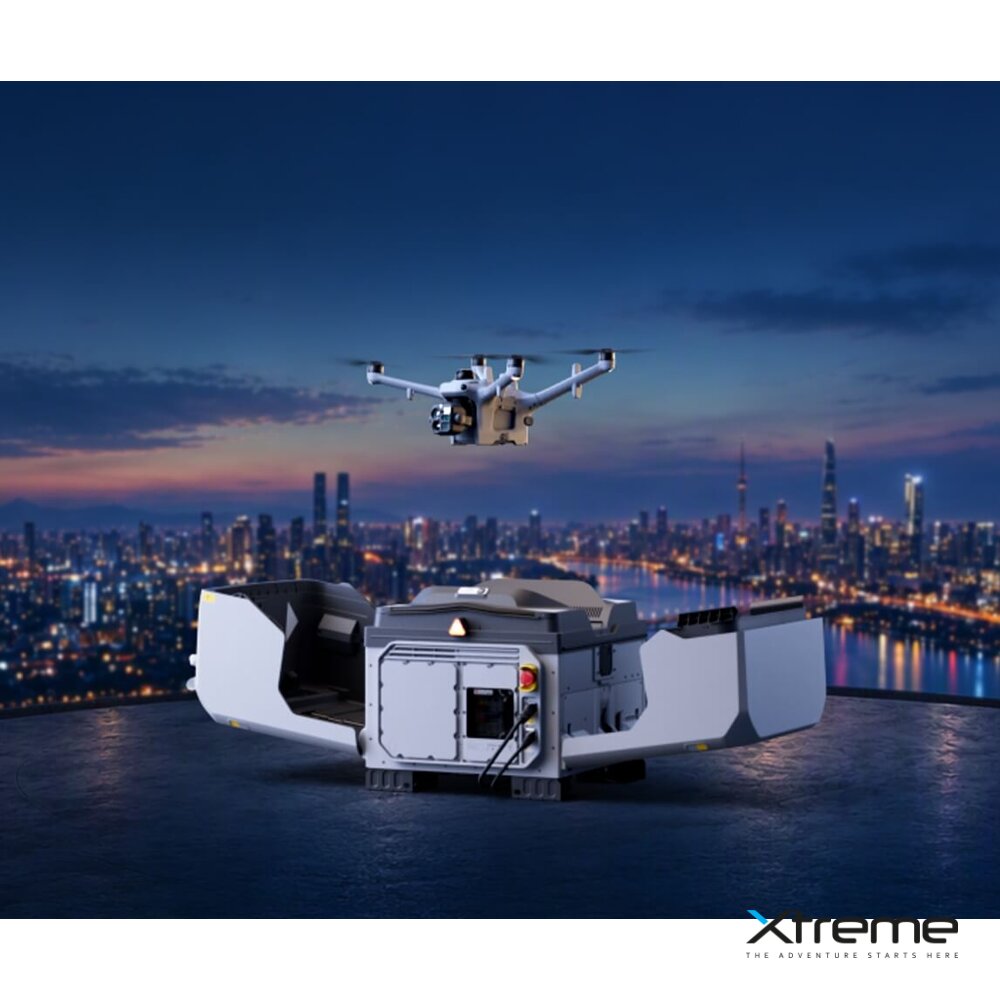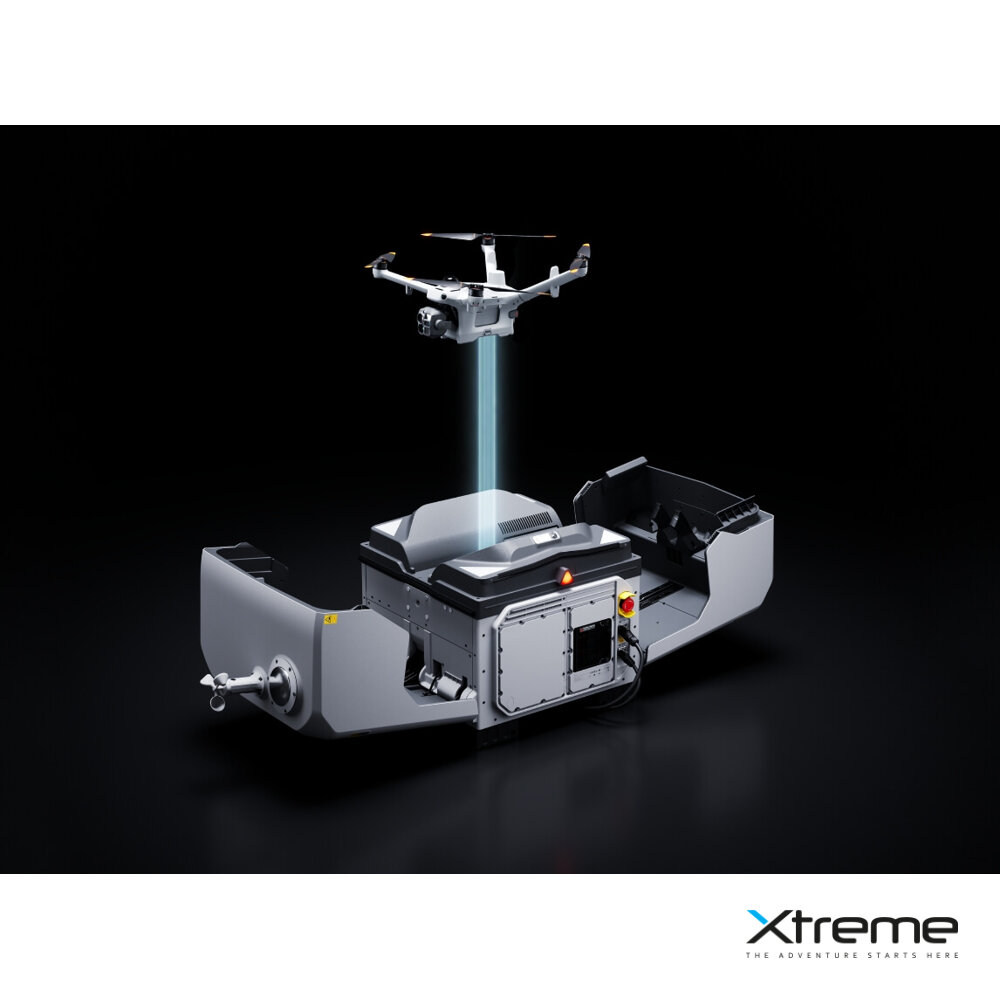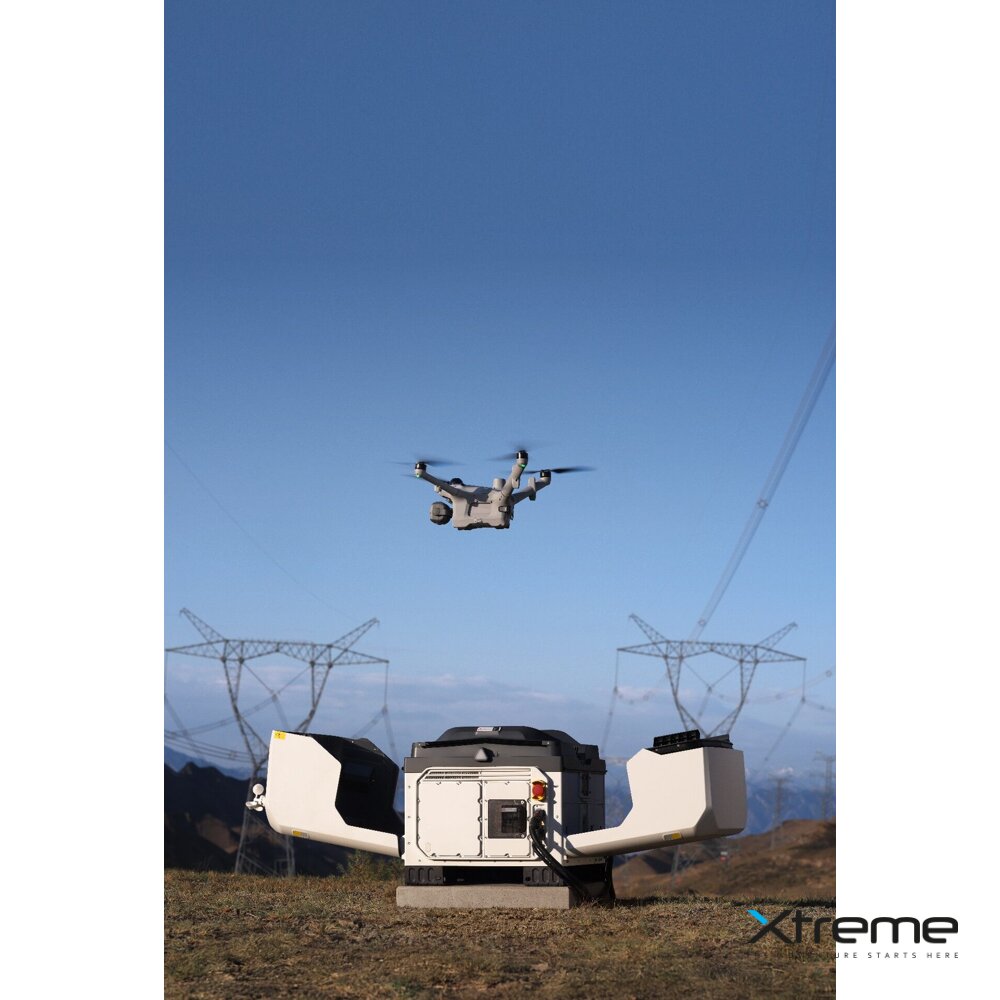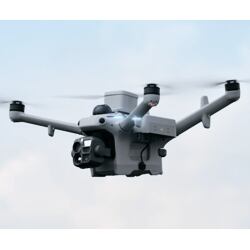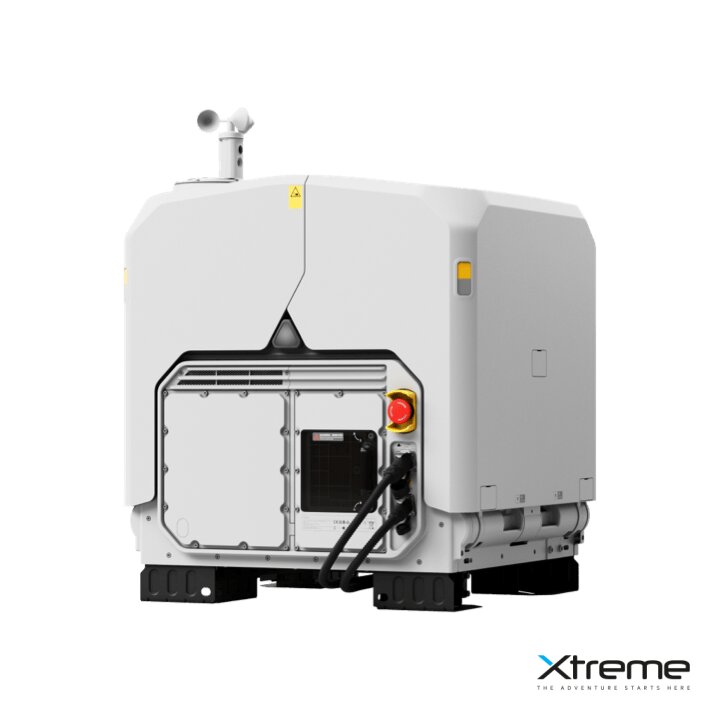

The DJI Dock 4 is an automatic docking station that replaces the battery of the Matrice 5TD drone in less than 25 seconds after landing. From landing to the next takeoff, less than 45 seconds pass. The Dock 3 needs 27 minutes of charging to do the same. The station is built for firefighters, rescuers, site protection and energy, where the drone must take off at any time, even several times an hour.
The price of the DJI Dock 4 station is €19,999 including VAT. The entire system with the Matrice 5TD drone (€9,999) and the O4 ground station (€2,242) costs €32,240 including VAT, excluding batteries. The Matrice 5TD batteries are sold separately. For operation with replacement, you need 2 to 4 pieces and we will add their price. You will receive the final price of the project in the offer, as it depends on the installation, integration and type of permit.
We deliver Dock 4 as a turnkey solution. We assess the site, install the station and connect it to your systems, prepare an operations manual and SORA 2.5 risk analysis for the operating permit, and train the pilots. After launch, we take care of service. You can find the full procedure and comparison with Dock 3 in the DJI Dock 4 category.
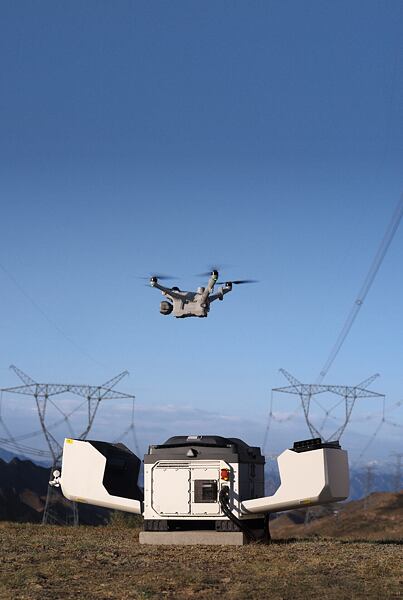
After landing, the cover closes, the station removes the discharged battery from the drone and inserts a charged one from the storage unit. The exchange starts automatically when the battery is less than 79%. After a short flight, for example to verify an alarm, the drone takes off with the original battery.
The battery tray has four slots and can hold up to three batteries, with one slot always free. Two batteries are charged simultaneously, from 15 to 95% in 27 minutes at 25°C. For missions longer than 27 minutes, the drone always has a charged battery waiting for it at the station upon return. During the exchange, footage from the previous flight is transferred to the station via Wi-Fi at speeds of up to 80 MB/s.
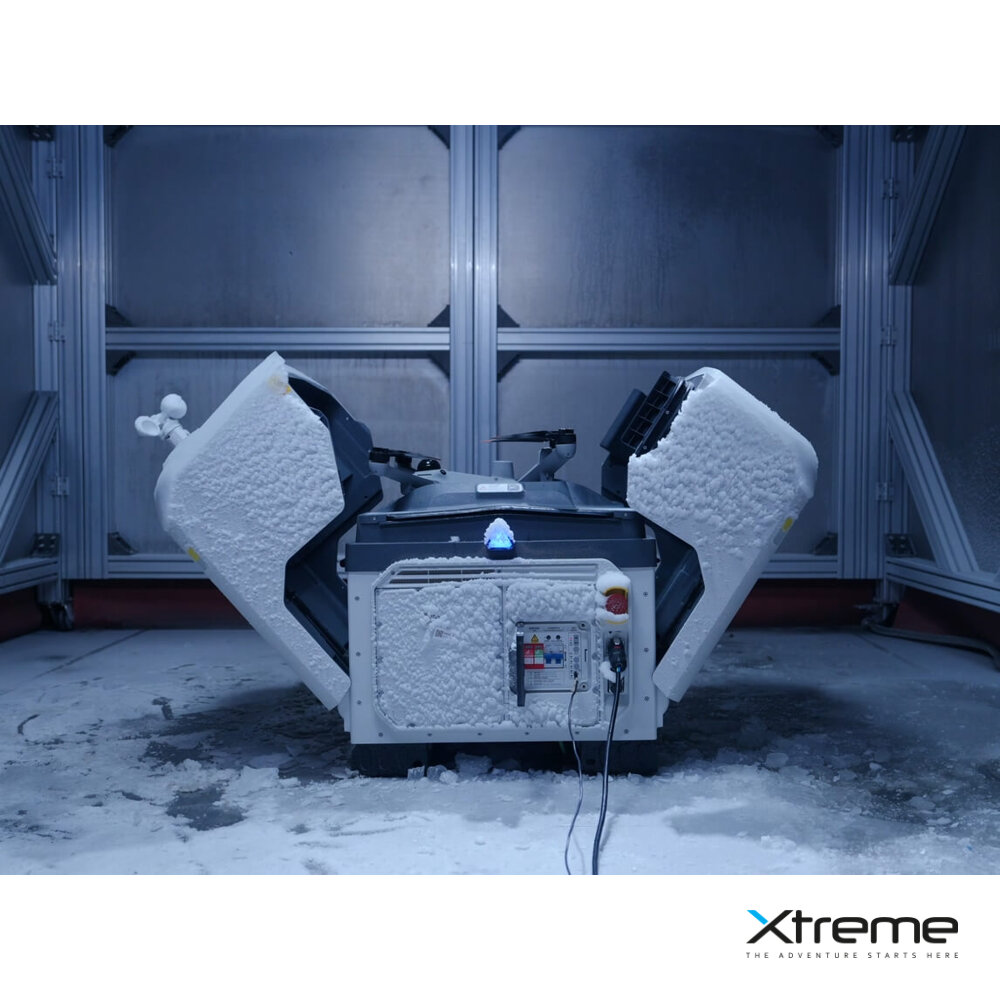
In the cold, the station preheats the batteries, in the heat it cools with compressor air conditioning. It has IP56 protection, the drone lands in winds up to 12 m/s, and the station can handle rain up to 2 mm/h. It monitors the weather itself, has wind, rain, temperature and humidity sensors and two 1080p cameras with a 151° field of view, one outside and one in the cabin.
Dock 4 does not have its own backup battery like Dock 3. The backup source is the drone batteries in the tank, each of which powers the station for approximately 4.5 hours and up to three are alternated in turn. If there are at least two in the tank, the station will replace the battery and send the drone during an outage. Charging and air conditioning do not work without a network.
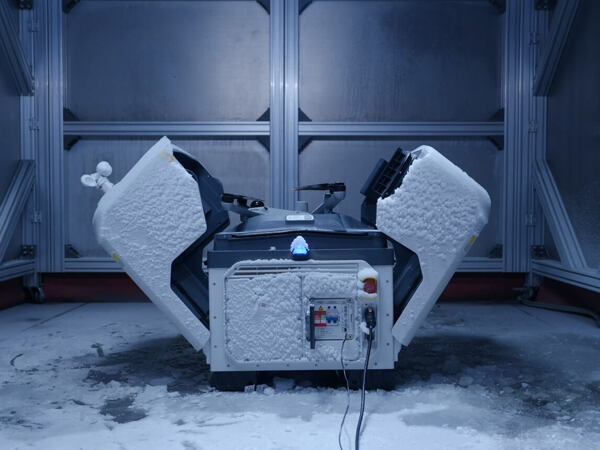
The station weighs 66 kg and requires a solid base with 400 × 400 mm mounting holes, the same as the Dock 3. It is powered by 100–240 V with a power consumption of up to 2,000 W, surge protection is 20 kA on the power supply and 10 kA on the Ethernet. The Internet should have at least 20 Mbps in both directions and latency up to 100 ms, or you can use 4G via the DJI Cellular Dongle 2.
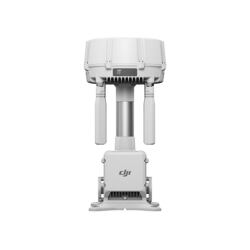
Video transmission, RTK and networking are provided by the DJI O4 Ground Station. It connects with a Cat 6 cable up to 80 m and is worth placing higher, for example on the roof. For a large area, you can add additional O4 stations and the drone will seamlessly switch between them during flight.
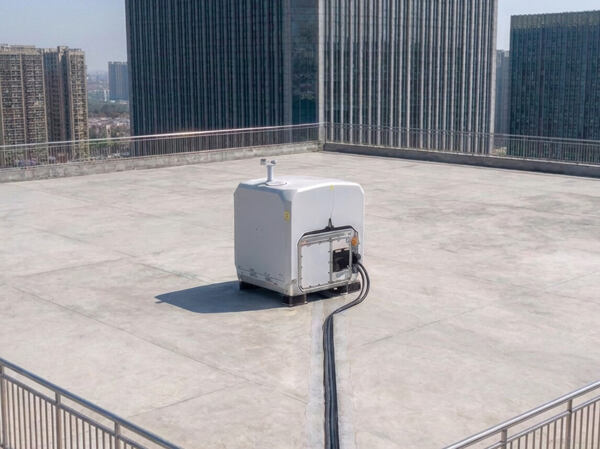
Replacing batteries is worthwhile where the drone takes off unpredictably and frequently. Firefighters and rescue workers have the drone at the scene of an intervention before the crew, the site security sends it on a night patrol or to verify an alarm. In the energy sector, it flies thermal imaging inspections of substations, lines and photovoltaic power plants. With 40-minute missions, the Dock 4 can make approximately 35 flights per day, the Dock 3 approximately 21 (calculation by Xtreme.sk from DJI data).
| Parameters | Value |
|---|---|
| Weight | 66 kg (without batteries and drone) |
| Dimensions with cover closed | 639 × 640 × 836mm |
| Dimensions with cover open | 1,750 × 640 × 550 mm |
| Power supply | 100–240 V AC, 50/60 Hz, max. 2000 W |
| Operating temperature | -40°C to 50°C |
| Coverage | IP56 |
| Max. wind at landing | 12 m/s |
| Max. rain intensity | 2 mm/h |
| Max. altitude | 5,000 meters |
| Battery replacement time | under 25 seconds |
| Turnover between flights | under 45 seconds |
| Batteries in the tray | max. 3 (4 positions) |
| Charging | 2 batteries simultaneously, 27 min (15 → 95%) |
| Backup power | batteries in the magazine, approx. 4.5 h each, up to 3 in a row |
| Noise level | below 60 dB (quiet mode), 65 dB (normal) |
| Mounting holes | 400 × 400 mm |
| Compatible drone | DJI Matrix 5TD only |
| Network | Ethernet via O4 Ground Station; 4G via DJI Cellular Dongle 2 |
| Software | DJI FlightHub 2 (cloud, On-Premises, FlightHub Sync), DJI Enterprise App, DJI Cloud API |
Technical data: DJI, enterprise.dji.com, verified 10/15/2026. Values are measured in a controlled environment.
When the drone's battery is less than 79% after landing. If the battery is higher, the drone will take off with the original battery. You can also manually initiate the replacement at any time via DJI FlightHub 2 or the DJI Enterprise app.
With a cable of 1.5 to 80 meters. The O4 station is powered from the dock via PoE and requires an outdoor waterproof Cat 6 cable. It is placed in an elevated, open location with direct visibility to the drone in the dock.
DJI recommends Gigabit Ethernet with a minimum upload and download speed of 20 Mbps, ideally 40 Mbps, and a latency of no more than 100 ms. Alternatively, it supports 4G via the DJI Cellular Dongle 2, which plugs into the O4 Ground Station.
Less than 60 dB in silent mode, 65 dB in normal mode.
Yes. The O4 Ground Station supports ONVIF IP cameras and will transmit up to four simultaneous 1080p streams to DJI FlightHub 2. This way, you have images from both the site cameras and the drone in one interface.
We send packages
on the day of the order
DJI warranty
service
Store
in Bratislava
Visa, Mastercard, ApplePay
Express Courier, Courier,
Pick-Up Point